

Searching for the Michigan LLC annual report lands you on a filing officially called the Annual Statement. As of 2026, every LLC files one with LARA by February 15 for $25, with a first-year exception most owners miss. The Michigan LLC formation guide covers the broader picture.
Does Michigan Require an Annual Report for LLCs?
Yes, but the official name is Annual Statement, not Annual Report. Every domestic LLC organized in Michigan and every foreign LLC authorized to transact business in the state files one each year.
The requirement comes from MCL 450.4207 of the Michigan Limited Liability Company Act (1993 PA 23), and the filing is collected by the Corporations Division at LARA. PLLCs file a slightly different document under MCL 450.4909, the Annual Report and Annual Statement, and that’s where the rules diverge.
For most readers, annual report is just a search habit. The legal record knows it as an Annual Statement, and you’ll want to use that term whenever you search LARA’s site.
February 15 Deadline and the September 30 Rule
The Michigan Annual Statement is due February 15 every year. It isn’t anniversary-based, which is a relief if you’re used to chasing your formation date around the calendar. For 2026 filings, the deadline is February 15, 2026.
The catch is the first year. Under MCL 450.4207a, an LLC formed or authorized to do business after September 30 of the prior year does not file on the immediately following February 15. The first filing is pushed to the next year instead.
Here are a few worked examples to make the rule concrete. Each one assumes a domestic LLC organized in the month shown:
- LLC organized June 4, 2025: first Annual Statement due February 15, 2026
- LLC organized October 12, 2025: first Annual Statement due February 15, 2027
- LLC organized August 22, 2026: first Annual Statement due February 15, 2027
LARA opens online filing for the upcoming year around mid-October, and reminder notices go to the resident agent’s address on file in the weeks before the due date.
Checking Your LLC’s Filing Status
If you’re unsure when your last filing posted or whether your LLC is currently in good standing, run a quick lookup. The Michigan business entity search pulls your entity ID, organization date, resident agent, and current status from LARA’s database. Bring up your record before you start the filing so the entity number and dates are ready to paste in.
$25 Filing Fee (LLC vs PLLC)
The standard Michigan LLC Annual Statement fee is $25 in 2026. It’s one of the most affordable annual filings in the country, with the rate locked in by statute through September 30, 2027.
After that date, MCL 450.5101 schedules the fee to drop to $15, though House Bill 4995 and PA 133 of 2023 pushed that reduction back once already. Treat the $15 figure as a future statutory schedule, not a near-term change.
Here’s how standard LLC and PLLC obligations line up:
| Entity Type | Annual Filing | 2026 Fee | Late Penalty (after Feb 15) |
|---|---|---|---|
| Domestic / Foreign LLC | Annual Statement | $25 | $50 if received after February 15 |
| Professional LLC (PLLC) | Annual Report + Annual Statement | $75 | $50 under MCL 450.4909 |
Filing the Annual Statement via the MiBusiness Registry Portal
LARA directs Annual Statement filings through the MiBusiness Registry Portal (MiBRP), the current online system for Michigan business filings. Most LLCs work through the filing in a single sitting, and the entity record updates after LARA processes the submission.
Online Filing on the MiBusiness Registry Portal
The MiBRP workflow runs through MiLogin authentication, an entity search, then the actual filing. Walk through it in this order:
- Go to mibusinessregistry.lara.state.mi.us and sign in with a MiLogin for Business account. New users create one in a few minutes

- Use the Business Entity Search to locate your LLC by name or entity ID number

- Click “Request access” on the entity record (a one-time step that links your MiLogin to the LLC)
- Select “File Annual Report/Statement” from the entity dashboard

- Review the pre-populated record: legal name, registered office address, resident agent name, resident agent address, and resident agent email
- Update any field that has changed since last year (the Annual Statement is the official way to correct registered office and resident agent details under MCL 450.4207)
- Confirm the authorized signer and pay $25 by credit card
- Download the receipt and verify your filing history
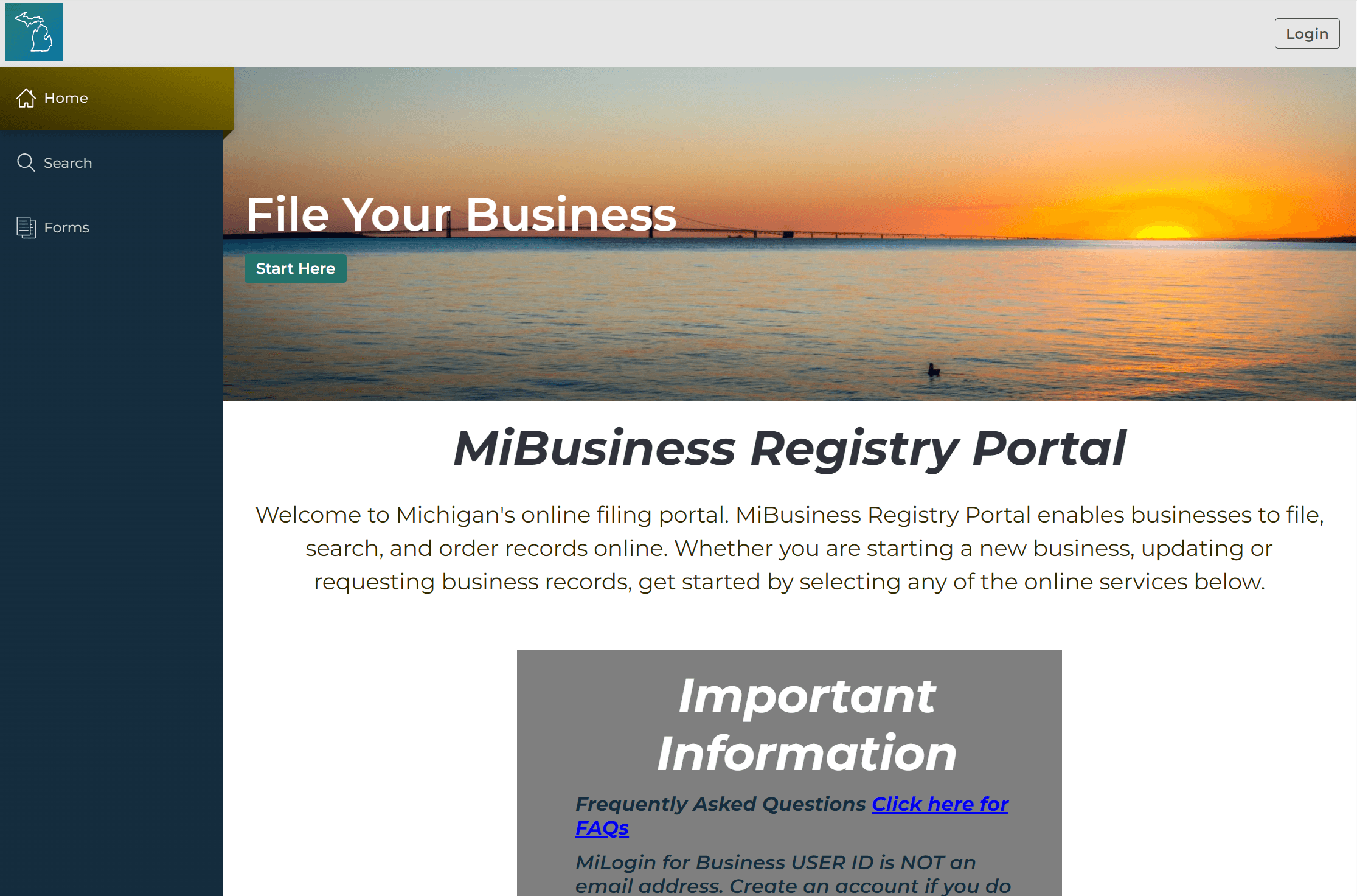
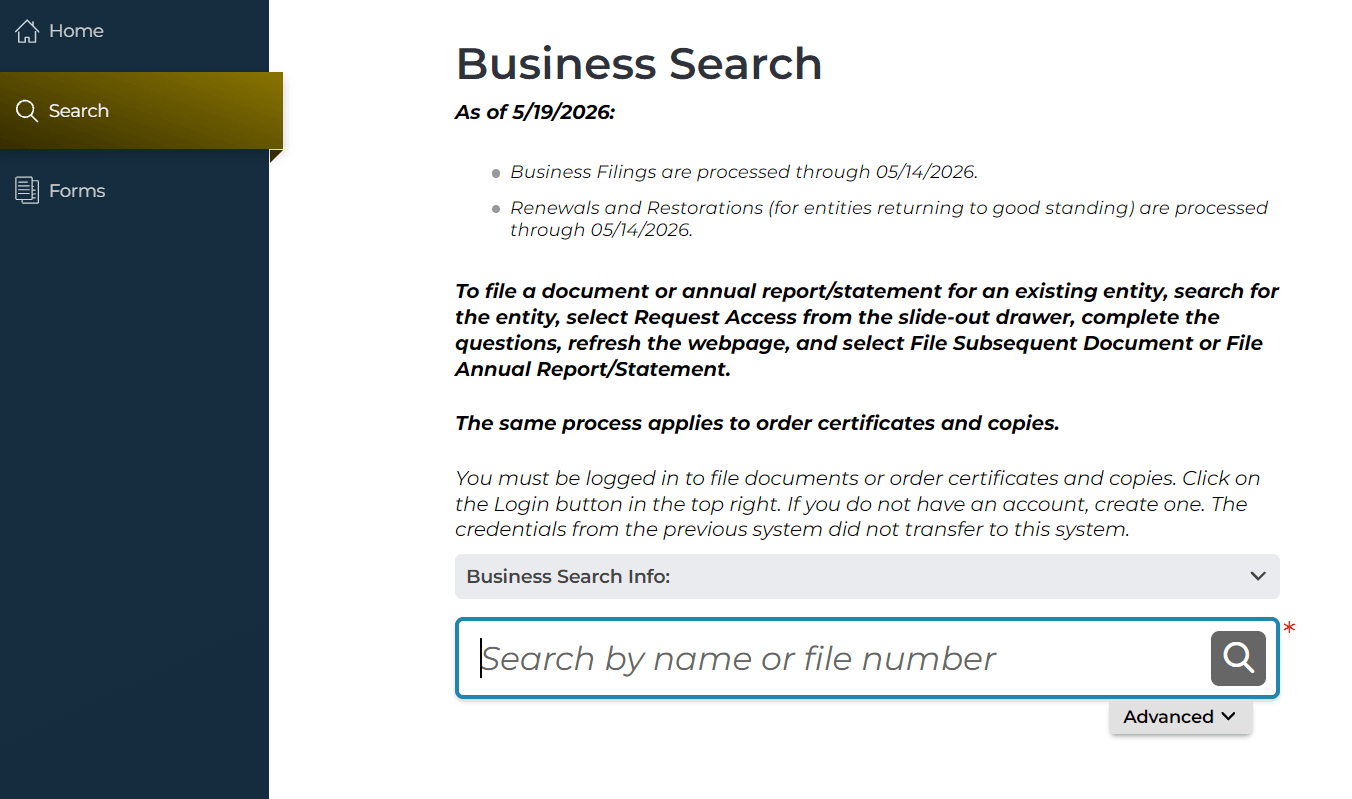
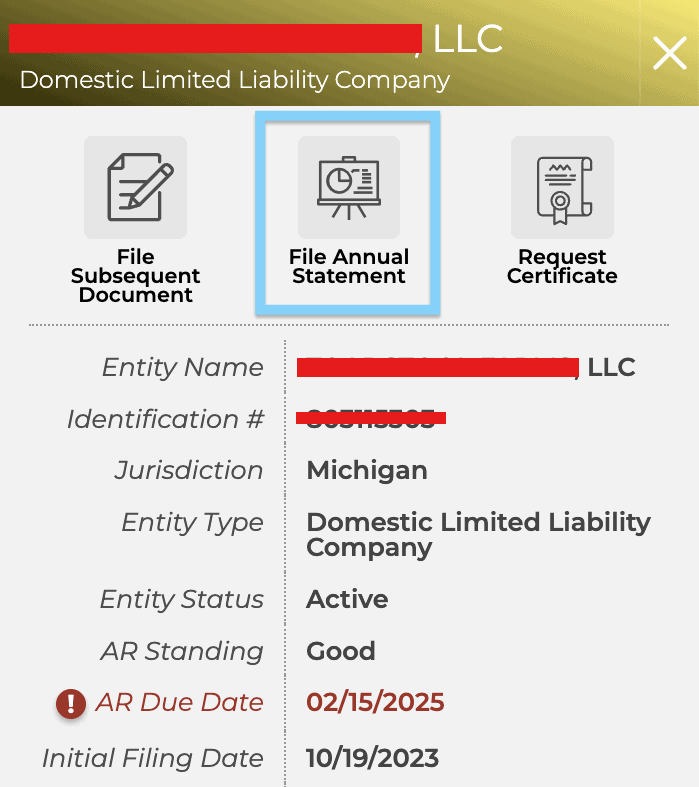
MiBRP requires a MiLogin for Business account and an entity-access link before you can submit. Older third-party guides that reference COFS, CID slips, and PIN numbers describe a legacy workflow that LARA has moved off.
Paper Filing
LARA’s annual filings page directs filers to MiBRP for online submission. If you received a paper notice in the mail asking you to fill out and return a form with a check, verify the source carefully before sending anything.
LARA issued a fraud alert about a non-governmental entity called New Business Filing LLC sending convincing-looking forms to Michigan LLCs. When in doubt, file directly through MiBRP or call LARA’s Corporations Division before paying any mail-in invoice. For more on what LARA processes look like end to end, the Michigan LLC formation timeline covers expected turnarounds.
Keep Your Michigan LLC Updated with Northwest
Northwest helps your Michigan LLC stay organized with reliable Registered Agent support, official notice handling, and smooth updates for annual statement details like resident agent and registered office information.
Information LARA Requires on the Annual Statement
The standard Michigan Annual Statement is narrower than what you’d file in many other states. MCL 450.4207 limits it to resident agent and registered office data, which means you don’t list members, managers, or business activity codes. Have these ready before you log into MiBRP:
- Entity ID number (visible on your Articles of Organization and in the Business Entity Search)
- Exact LLC name as registered with LARA
- Registered office address in Michigan (must be a physical street address; P.O. boxes alone won’t satisfy MCL 450.4207)
- Resident agent name
- Resident agent address (Michigan street address)
- Resident agent email address, if you want LARA reminders to go electronically
- Authorized signer name
EIN, NAICS code, member lists, and tax information are not part of the standard LLC Annual Statement. PLLCs are the exception under MCL 450.4909, which requires names and addresses of members and managers plus professional licensing certification.
The $50 Late Fee and What LARA Can Do After Two Missed Years
Filing the Annual Statement late costs more than the original $25. LARA charges a $50 penalty if the Annual Statement is received after February 15. That’s a 3x markup on a fee you’d otherwise have paid in five minutes.
The real consequence isn’t the $50, though. It’s what happens if the missed filings keep stacking. Under MCL 450.4207a, after two consecutive years of non-filing LARA’s administrator can pursue dissolution, revocation, or place the LLC into not in good standing status.
Loss of good standing is the most common outcome and the one most worth understanding. The LLC won’t receive a Certificate of Good Standing, which banks, lenders, and out-of-state filings routinely ask for. Owners may also lose rights to the business name and any assumed names on file.
Until restoration is filed, LARA will refuse most other filings from the entity. That filing block is what turns a small fee into a real headache, because every other compliance change waits behind the same locked door.
Restoring Good Standing with Form CSCL/CD-770/771
If your LLC slipped to not in good standing, the way back is a Certificate of Restoration of Good Standing (form CSCL/CD-770/771). The math isn’t dramatic on a per-year basis, but it does add up fast.
LARA charges $50 for the restoration filing itself, plus $25 for each missing Annual Statement year through September 30, 2027. The missing annuals are filed with the restoration, not as separate submissions. If restoration is filed on or after February 15, the current-year Annual Statement is included with another $25.
Standard processing time for restoration runs up to 10 business days for non-expedited submissions. File restoration with enough cushion before any bank or out-of-state event that depends on good standing.
Rights to the LLC name are the part most owners underestimate. Once your LLC is not in good standing, those name rights are at risk. If the name is no longer available when restoration is filed, the LLC must choose a new compliant name and update every contract, account, and license that referenced the old one.
Common Questions About the Michigan Annual Statement
Most filing questions cluster around terminology, the February 15 deadline, the first-year rule, and what LARA actually sends in the mail. Quick answers to the four that come up most often:
Is the Michigan Annual Statement the same as an annual report?
Functionally yes, legally no. The filing does the same job as the annual report in other states: it keeps your LLC’s public record current with LARA. Michigan’s statute calls it an Annual Statement for standard LLCs, while PLLCs file an Annual Report and Annual Statement together. Reviewing your Michigan operating agreement at the same time is a smart parallel habit, even though it isn’t filed with LARA.
What happens if I miss the February 15 Michigan Annual Statement deadline?
LARA assesses a $50 late fee on Annual Statements received after February 15. If you continue to miss filings, the consequences scale: after two consecutive missed years, LARA can pursue dissolution, revocation, or move the LLC to not in good standing under MCL 450.4207a.
Do I have to file an Annual Statement my first year if I formed after September 30?
No. MCL 450.4207a exempts LLCs organized (or foreign LLCs authorized) after September 30 from the immediately following February 15 filing. An LLC formed November 12, 2025 doesn’t file in February 2026; it files first on February 15, 2027.
Does LARA send a reminder before the February 15 deadline?
Yes. LARA mails reminders to the resident agent’s address on record and sends email reminders if a resident agent email is on file in MiBRP. If your resident agent record is stale, the reminder may not reach you, which is why keeping that record current matters more than the reminder itself.
Keep Your Michigan LLC Compliant with Harbor Compliance
Harbor Compliance helps your Michigan LLC stay organized with reliable Registered Agent support, official notice handling, and reminders for annual statement filings with LARA.