

In most situations, you do not legally need a lawyer to form an Limited Liability Company (LLC). An LLC is created under state law, and most states let you file the formation document yourself through their official filing system. The exact requirements can vary, so it is important to follow your state’s instructions. The decision to hire a lawyer is usually about complexity and risk, not a mandatory rule.
What Do You Need to Form an LLC?
The exact requirements depend on the state, but the core setup is usually straightforward. The safest approach is to follow your state’s official instructions because states may use different rules for LLCs.
In most cases, you will need:
- State formation filing: File the state’s formation document (often called “Articles of Organization”) through the state’s system.
- Registered agent: Choose a registered agent in the state before you file.
(If you’re not sure what the role covers, see registered agent role explained) - Filing fee: Pay the filing fee required by the state. Fees vary by state (for example, New York lists a $200 filing fee for the Articles of Organization).
- Basic business information: Provide the key details the state asks for, such as the company name, address, management structure, and registered agent information.
If privacy matters, here are practical ways to avoid using your home address for your LLC while staying compliant. - Operating agreement if needed: Some states require a written operating agreement. (Example reference: New York LLC Law §417).
Form your LLC the right way with Northwest Registered Agent
Once you know the requirements, the next step is filing correctly. Northwest Registered Agent helps you prepare and submit your LLC paperwork, provides a registered agent, and keeps your business compliant from day one.
When You Can Form an LLC Without a Lawyer
Many people can handle the setup on their own when everything is simple and they can follow the state’s official instructions. It is usually a good fit when:
- You have a simple single-member setup
Common for freelancers, consultants, online sellers, and other small business owners. The IRS explains that a single-member LLC is generally treated as a disregarded entity for federal income tax purposes (see what “disregarded entity” means) unless it elects corporate treatment, which is one reason single-owner setups are often simpler at the start. - Your ownership and internal rules are straightforward
No partners, no investors, no special profit-sharing terms, and no unusual internal arrangements that require custom rules. - You are comfortable handling basic paperwork
You can read the state instructions, provide the required details, and complete the filing carefully. States with streamlined online portals reward this DIY approach; for example, owners who form an LLC in Wyoming can complete the entire Articles of Organization filing through the Secretary of State website in under 30 minutes.
When It Is Worth Hiring a Lawyer
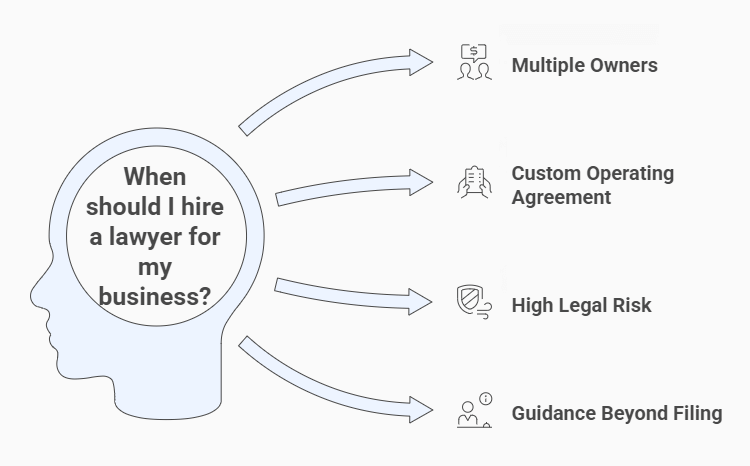
Legal help is usually most worthwhile when the situation is not standard and mistakes could become expensive later. It often makes sense when:
- You have multiple owners
Multi-owner setups usually need clearer rules on ownership, voting, profit sharing, and decision-making. The IRS also notes the default federal tax classification differs depending on whether the LLC has 1 owner or 2+ owners, which can add complexity.
If you want a quick overview of what changes in a 2+ owner setup (including default tax treatment), see our multi-member LLC guide. - You need a custom operating agreement
A lawyer can help when you need special terms that a basic template may not cover well, such as uneven profit splits, specific voting rules, or exit terms. - Your business has higher legal or regulatory risk
This may apply if you rely heavily on contracts, need licenses, or operate in a regulated area. To confirm what applies to your activity and location, use the SBA licenses and permits guide. Requirements can get specific quickly.
If you are unsure whether forming an LLC replaces licensing requirements, see our LLC vs business license breakdown. - You want guidance beyond filing
A lawyer may be useful when you need help with structure, compliance, or risk prevention, not just submitting a form. State filing offices may also state that their guidance is not legal advice, which is another reason some owners seek professional help for specific questions.
California is a clear example of where that professional review pays off: founders who plan to start an LLC in California face the $800 annual franchise tax owed to the Franchise Tax Board, a Statement of Information due within 90 days of formation, and a stricter framework around professional LLCs that often justifies an attorney walk-through of the Articles of Organization.
What a Lawyer Helps With During LLC Formation
A lawyer is most useful when the work goes beyond submitting a standard state filing. The main value is guidance on structure, internal rules, and risk issues that are easy to overlook early on.
Here are common areas where legal help can add real value:
- Choosing the right management setup
Help deciding how the company will be run and who has authority to act on its behalf. Some states ask you to indicate the management structure in the formation filing, so getting this right matters. - Drafting or reviewing the operating agreement
Clarifying roles, decision rules, voting thresholds, profit distribution, and what happens if an owner leaves. This matters even more in states that require a written operating agreement. - Spotting issues early
Identifying problems that can lead to disputes or compliance trouble later, especially when the business will rely heavily on contracts, hires, or outside funding. - Answering state-specific or business-specific questions
Rules vary by state, and your situation may not fit standard instructions. The IRS notes that states may use different regulations for LLCs, so state-level details can change what you need to do. A lawyer is particularly useful when founders form a Delaware LLC while operating physically in another state, since foreign qualification and the Court of Chancery jurisdiction clauses need to be reviewed before signing the operating agreement. - Licenses and permits
If your activity needs licensing or permits, requirements can get specific quickly. The SBA notes that licenses and permits depend on factors like business activity and location.
Start your LLC easily with ZenBusiness
If you don’t need full legal support, ZenBusiness makes LLC formation simple. They help you file your paperwork, organize your business details, and keep your company compliant as you get started.
DIY vs Lawyer vs LLC Formation Service
Most people choose one of three paths: do it themselves, use a formation service for the filing tasks, or hire a lawyer for advice and custom documents .The best option depends on how simple your setup is and how much risk you want to carry personally.
DIY Formation
DIY is usually the most practical when the setup is simple and you are comfortable following the state’s instructions.
What to expect:
- Lowest cost
You typically pay only the state’s filing fee and your own time. - Best for simple cases
Especially one owner, straightforward setup. - Requires more time and attention
You are responsible for reading the instructions, completing the filing, and keeping your records organized. States with clear official guidance make this easier; the Florida Sunbiz portal, for example, walks DIY filers through every required field when they set up a Florida LLC without legal help.
If cost is your main driver, it also helps to understand when you can serve as your own registered agent (and what requirements you must meet).
LLC Formation Service
A formation service is a middle option. It can help handle filing tasks, but it generally does not replace legal advice.
What to expect:
- Middle option
You pay for convenience in addition to the state fee. - Helps with filing tasks
Good when you want the admin side handled cleanly. - Good for convenience without full legal advice
Useful when your situation is standard and you mainly want help submitting the paperwork. This middle path suits founders who want to create an LLC in Texas through SOSDirect but prefer letting a service handle the Certificate of Formation, registered agent designation, and Public Information Report scheduling.
Useful when your situation is standard and you mainly want help submitting the paperwork (see our best LLC services comparison).
Hiring a Lawyer
This is typically the highest-cost option, but it can be the best fit when complexity or risk increases. The main value is the advice and customization, not the act of submitting paperwork.
What to expect:
- Highest cost
You are paying for guidance and drafting, not just submission. - Best for complex ownership, custom documents, or higher risk
Especially when multiple owners are involved, or when the operating agreement needs special terms. - Main value is legal guidance
This is where you reduce the chance of preventable disputes and compliance problems later.
If you want a realistic cost range and what those fees usually cover, see our guide on attorney fees for creating an LLC.
Before you decide, here’s a quick comparison table to make scanning easier:
| Option | Best for | What you get | Tradeoff |
|---|---|---|---|
| DIY | Simple setups | Full control, only state fees | More time, more responsibility |
| Formation service | Standard situations, convenience | Help with filing tasks | Limited guidance |
| Lawyer | Complex setup or higher risk | Advice + custom documents | Highest cost |
Final Answer: Should You Hire a Lawyer to Form an LLC?
For most people, the decision is practical, not legally required. In many cases, you can complete the state filing yourself, but legal help can be worth it when complexity or risk increases. Keep in mind that rules can vary by state.
Frequently Asked Questions
Here are quick answers to the most common questions people have before forming an LLC. Use these to confirm the basics and decide whether DIY, a service, or legal help makes the most sense for your situation.
What are the legal requirements for forming an LLC?
You must follow your state’s filing rules. In general, forming an LLC means filing a formation document with your state, paying the required fee, and providing key details like the business name, address, and registered agent information. The IRS notes that an LLC is created under state statute and each state may use different rules (see the IRS LLC overview), so the exact requirements depend on where you file. Start with your state’s official instructions.
How complicated is the process of forming an LLC without a lawyer?
For simple setups, it is usually manageable. Most states provide step-by-step instructions that are meant to be usable for everyday owners, especially when the setup is straightforward. The process tends to feel more complicated when there are multiple owners, special terms, or extra state-specific steps you must complete after filing. If you keep the ownership and internal rules simple and follow your state’s official checklist carefully, DIY is often realistic.
What specific tasks can a lawyer assist with during LLC formation?
Structure choices, custom documents, and risk spotting.
A lawyer can help you choose the right management setup, draft or review an operating agreement, and spot issues that could become disputes later. This is especially useful when ownership terms are not standard, when you need custom profit or voting rules, or when the business will rely heavily on contracts or licensing. In general, the main value is legal guidance and document tailoring, not just submitting the state filing.
Are there risks associated with DIY LLC formation?
Yes, mainly avoidable mistakes and missing state-specific steps.
DIY risks often come from misunderstandings, incomplete information, or using generic documents that do not match your real situation. A common issue is assuming your state has the same rules as another state. The IRS points out that states may use different regulations, so relying on a one-size-fits-all checklist can lead to errors. Also, some states have extra internal-document expectations.
What resources are available for those considering DIY LLC formation?
Start with official state and federal guidance.
For DIY, the most reliable resources are official sites. Check (1) your state’s business filing office instructions, (2) the SBA’s “Register your business” guide for a clear overview of common steps, and (3) the IRS LLC pages for federal tax classification basics.
- Internal Revenue Service: Get an Employer Identification Number (EIN)
- Internal Revenue Service: Single Member Limited Liability Companies
- New York State Department of State: Articles of Organization for Domestic Limited Liability Company
- New York State Department of State: Forming a Limited Liability Company in New York
Form your LLC without the legal guesswork with Harbor Compliance
Harbor Compliance helps you handle LLC formation with clear guidance, state filing support, and compliance tools. So you can move forward confidently without paying for unnecessary legal help.