

A free business bank account is one of the easiest ways to keep LLC overhead low. But “free” usually means $0 monthly maintenance, not zero fees forever. This guide focuses on accounts that are $0 per month, can be opened online, and are practical for most U.S. LLCs. A quick scan of the five options comes first, then each one gets its own section.
| Account | Monthly fee | Minimum opening deposit | Best for |
|---|---|---|---|
| Mercury | $0 | $0 | Startups and online-first LLCs that want simple, fee-light banking |
| Bluevine (Business Checking, Standard) | $0 | $0 | LLCs that want a free account with optional earning potential |
| Novo | $0 | $0 | Simple banking plus useful integrations for day-to-day ops |
| Relay (Starter) | $0 | $0 | Teams that need clean separation of funds and tighter spend control |
| Grasshopper Bank (Innovator Business Checking) | $0 | $100 | A bank-branded option with $0 monthly fee (but requires initial funding) |
For this roundup, the PDF fee schedules for 15+ business checking options were pulled and compared on what actually costs you money in real life: overdraft/NSF rules, outgoing wire pricing, cash deposit limits (and overage fees), and any “free with conditions” traps.
Only accounts that are truly $0/month and practical to open online for most U.S. LLCs made the list. If the marketing page said one thing and the fee schedule said another, the fee schedule won and the account was cut.
What a “Free Business Bank Account for LLC” Really Means
When a bank calls an account “free,” it usually means $0 monthly maintenance fee, not “no fees at all.” Many accounts still charge for specific activities (cash handling, wires, and so on). The fastest way to evaluate “free” is to check two lines: monthly fee and how to avoid it.
$0 Monthly Fee vs “Free with Conditions”
A true free account is simple: the monthly fee is $0, period.
But a lot of business checking accounts are “free” only if you meet requirements every statement cycle. For example, Bank of America lists a monthly fee for one of its business checking products and describes ways to avoid it (such as maintaining a combined average monthly balance).
State-specific fees also reshape what “free monthly” actually costs you across a full year. If you open an LLC in California, the FTB’s flat $800 annual franchise tax hits your business checking before any bank fee does, so the order of operations matters when budgeting startup cash.
Here’s how to interpret the fine print:
- $0 monthly fee (unconditional):
No minimum balance requirement to keep it free. - Fee-waived (conditional):
A monthly fee exists, but you can avoid it by hitting a balance or relationship rule.
Common Fees that Still Apply
Even if the monthly fee is $0, banks can charge for specific actions. Before opening an account, it helps to skim for the fee categories below.
These are the fee types that most often impact real-world “free” accounts:
- Cash deposit processing fees:
Some banks give a monthly cash-deposit allowance, then charge per $100 deposited above it. - Wire fees:
Outgoing wires often cost extra, especially same-day or international. - Overdraft and NSF fees:
Many institutions still charge sizable overdraft fees, and consumers often cite “roughly $35” as a typical overdraft fee figure. - Transaction limits on some business accounts:
Some accounts cap included transactions and charge per item after that threshold.
To make this easier to scan, here’s a quick “what to watch” table.
| Fee type | When it shows up | What to check first |
|---|---|---|
| Cash deposit fees | You deposit cash regularly | Free cash deposit limit per statement cycle, then overage pricing |
| Wires | You send vendor payments via wire | Outgoing domestic vs international wire fees |
| Overdraft | Timing gaps between payments and deposits | Overdraft fee amount, opt-in rules, and whether the account advertises “no overdraft fees” |
| Transaction overages | High volume checks or in-branch transactions | Included transaction count and overage fee per item |
Can You get a Free Business Bank Account for LLC with No Deposit?
A no-deposit “free” business account is possible, but it depends on the provider. Some online-first accounts advertise no minimums and no account opening fees, which typically points to no required opening deposit. Mercury, for example, states its business banking has no monthly fees, no account minimums, and no account opening fees.
But many traditional banks still require an opening deposit. For example, PNC states a $100 minimum opening deposit for one of its business checking accounts.
Form Your LLC with Clear, Upfront Pricing from Northwest
Before worrying about business banking fees, make sure your LLC is set up right. Northwest forms your LLC with straightforward pricing, no confusing add-ons, and real compliance support from day one.
Requirements to Open a Free Business Bank Account for an LLC Online
Opening a business account online is usually straightforward, but banks still need to verify (1) the business is real and (2) who owns and controls it. That means you should expect identity checks, business formation proof, and ownership details, even if the account is $0 per month.
What Most Banks Ask For
Most institutions ask for three categories of information:
- Tax ID (usually an EIN)
Internal Revenue Service confirms you can get an EIN directly from the IRS online for free. Here’s how to get your EIN quickly (and avoid common mistakes). - LLC formation documents
Banks commonly request formation documentation, and the exact document name depends on your state (for example, Articles of Organization, Certificate of Formation). Wells Fargo provides document checklists by business type and notes it verifies the business and associated individuals. If you haven’t formed the entity yet (or you’re trying to keep setup costs lean), use this DIY “start an LLC for free” guide to get the formation paperwork in place before you apply - Owner and control-person identity details
Banks are required to identify and verify the beneficial owners of legal-entity customers at account opening under FinCEN’s Customer Due Diligence rule.
Practically, that means you may be asked for owner information like name, address, DOB, and tax ID. Chase lists the kind of ownership details it may collect (including for owners above a specified ownership threshold). The exact formation document banks request depends on your state of incorporation: if you apply for LLC in Delaware, the Division of Corporations issues a Certificate of Formation rather than Articles of Organization, and your bank’s checklist needs to recognize the equivalent.
When You Might Still Need an Opening Deposit
A “free” account can still require funding to activate it. Some banks ask for an initial deposit to open, and the amount varies by bank and account type.
If you’re trying to stay at $0 upfront, look for two separate statements on the fee schedule:
- “Minimum opening deposit”
- “Monthly maintenance fee” and whether it’s unconditional or waiver-based
Online vs “Near Me”
Online works well for most service-based LLCs, especially if you rarely handle cash. But a “near me” option matters in a few common scenarios:
If any of the points below apply, having branch access can save headaches:
- You deposit cash frequently (cash handling rules and limits are common).
- Your ownership structure is more complex (multiple owners, layered entities) and the bank asks for in-person verification.
- You need in-person services like cashier’s checks, change orders, or quick document verification (common at traditional banks).
5 Best Free Business Bank Accounts for LLC (2026)
If you want a free business bank account for an LLC, “free” should mean one thing first: $0 monthly fee. From there, the right pick depends on what you actually do: earn interest on idle cash, separate budgets, pay vendors by ACH, or handle occasional cash deposits.
The five options below are all popular for U.S. LLCs that want to open an account online and keep monthly costs at $0. (Some are fintech platforms, so deposits are held at partner banks with FDIC pass-through coverage)
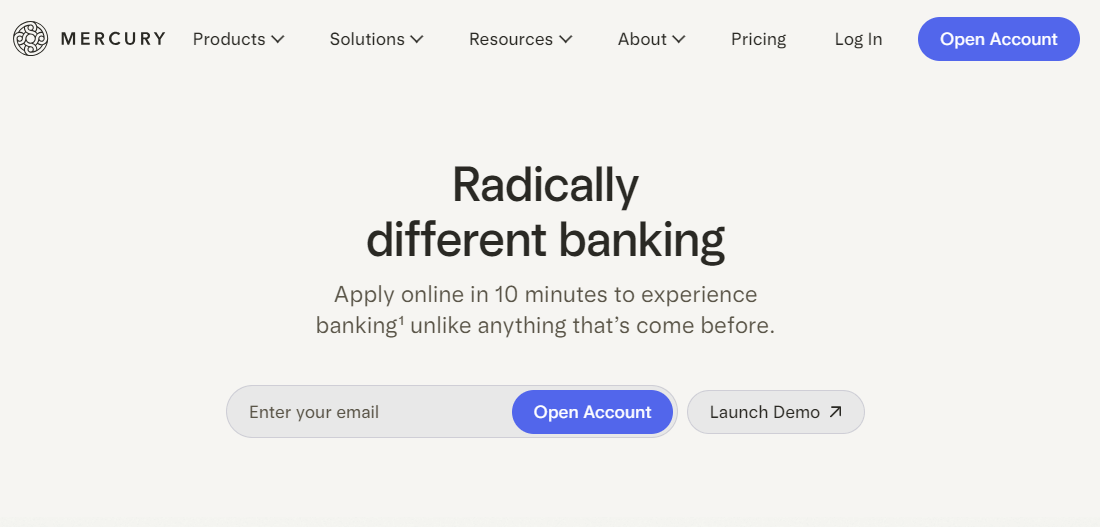
1. Mercury: Best overall free business bank account for LLC online
Best for:
Online-first LLCs that want straightforward banking with no monthly fee and minimal friction for transfers and payments.
Mercury also fits owners who deliberately picked a low-overhead formation state for the legal entity itself. If you set up an LLC in Wyoming to keep annual fees at $60 and skip personal income tax exposure, pairing that with a $0 monthly banking stack stays consistent with the cost-light approach.
Key free features (high level)
Here’s what stands out on the free side:
- No monthly fees, no minimum balance, and no opening fee
- FDIC pass-through coverage via partner banks (Mercury is a fintech, not a bank)
- Often highlighted for free USD wire transfers and ATM fee rebates in third-party reviews
Limits/fees to watch
Before you commit, watch these common deal-breakers:
- No cash deposits (even though partner banks have branches)
- Fees can apply for specific “advanced” or non-USD activities (for example FX-related features)
The Dealbreaker (Who should avoid):
Avoid Mercury if your LLC handles physical cash daily, such as retail storefronts, food service, or tip-heavy operations. With no cash deposits, you will hit an operational wall, not a minor inconvenience.
2. Bluevine: Best free business bank account for LLC if you want earning potential

Best for:
LLCs that keep meaningful balances in checking and want a shot at earning interest without moving money into a separate savings account.
Earning APY on idle cash matters more if your operating state has no income tax draining yields back out: owners who open an LLC in Florida typically keep more of the interest accrued, since Florida levies no personal income tax on pass-through LLC distributions.
Key free features (high level)
At a high level, the “free value” looks like this:
- Standard plan: $0 monthly fee, no overdraft fees, no minimum balance, and unlimited transactions
- Interest is available, but it can depend on plan and eligibility rules (Standard vs upgraded plans)
- FDIC coverage through partner banks (Bluevine is a fintech, not a bank)
Limits/fees to watch
This is where “free” can quietly change based on how you use it:
- Cash deposits are possible via networks, but fees apply (for example up to $4.95 at Green Dot locations)
- Outgoing wires and some cash deposit methods can carry fees (check the fee schedule for the exact numbers)
- The best APY offers may require meeting specific activity or balance rules, or using an upgraded plan with a fee that can be waived
The Dealbreaker (Who should avoid):
Avoid Bluevine if you deposit cash frequently or rely on in-branch services. Cash deposit networks can work, but per-deposit fees can add up fast compared with a local branch bank.
3. Novo: Best for simple banking plus integrations

Best for:
Solo operators and small LLCs that want a clean, online-only checking account plus integrations with the tools you already run your business on.
Key free features (high level)
Novo’s “simple and usable” angle shows up in these areas:
- No monthly fees and no minimum balance
- FDIC coverage through its partner bank (Novo is a fintech, not a bank)
- Integrations are a major selling point (ecommerce and accounting workflows show up often in reviews)
Limits/fees to watch
Novo is not built for cash-heavy businesses:
- Cash deposits are not supported
- Outgoing domestic wires can cost up to $30, and “express” style transfers may be fee-based
- ATM fee refunds are limited (example: $7/month mentioned in reviews), so frequent ATM use can still cost you
The Dealbreaker (Who should avoid):
Avoid Novo if your LLC sends domestic wires often. A wire fee, commonly around $25 to $30 at many banks, can quietly erase the value of a $0/month account.
4. Relay: Best for separating funds and controlling team spending
Best for:
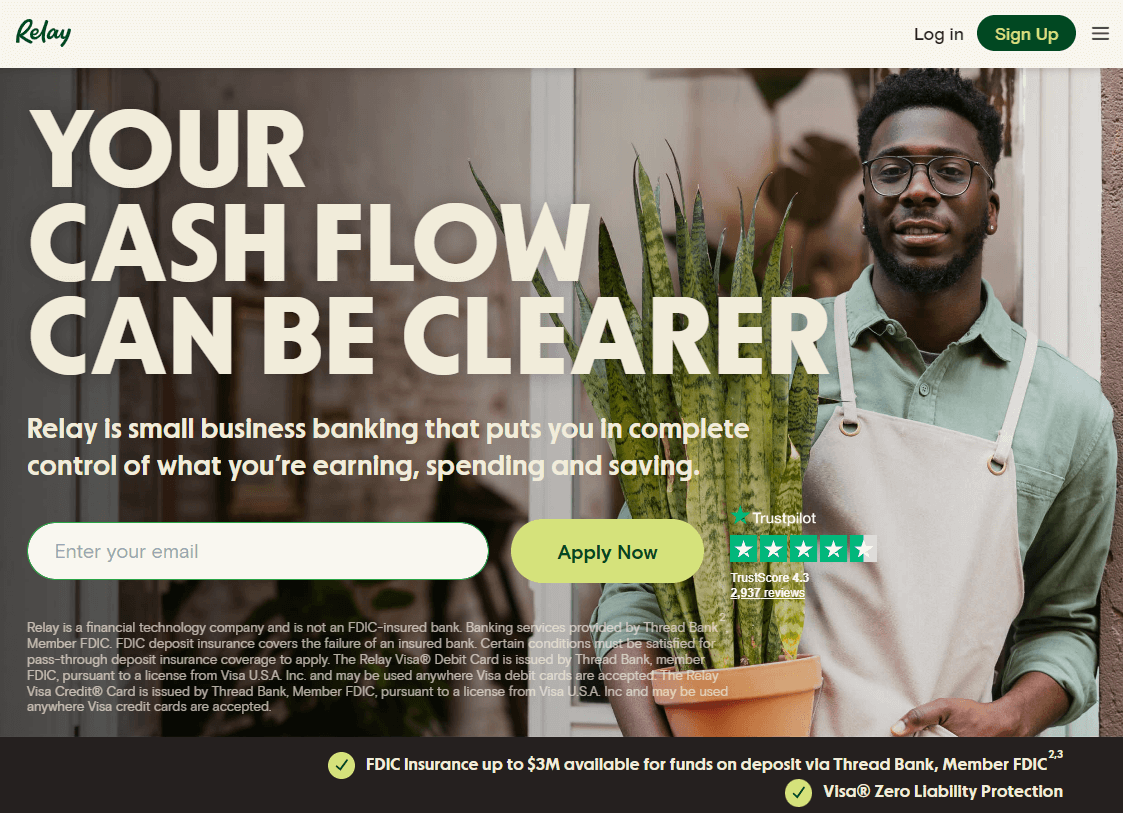
LLCs that want to split money into multiple buckets (taxes, payroll, owner pay, ads) and issue team cards with spend controls.
Key free features (high level)
Relay’s free plan is most compelling when you need structure:
- Starter plan is $0 per month, and supports up to 20 checking accounts
- No minimum balance requirements and no minimum deposit to finalize opening
- Employee cards with spend policies are a core part of the product positioning
- FDIC pass-through coverage via its partner bank
Limits/fees to watch
Cash deposits are possible, but you need to understand the mechanics:
- Cash deposits: free at Allpoint+ ATMs, fee up to $4.95 at Green Dot retailers, plus per-transaction limits
- Savings APY exists, but it’s on savings accounts, not checking (so “earnings” may require using a separate savings bucket)
The Dealbreaker (Who should avoid):
Avoid Relay if you want one simple checking account and do not need multiple accounts, cards, or role-based permissions. Relay’s advantage is the structure. Without that need, it can feel like extra setup.
5. Grasshopper Bank: Best if you prefer a bank-branded option with $0 monthly fee
Best for:
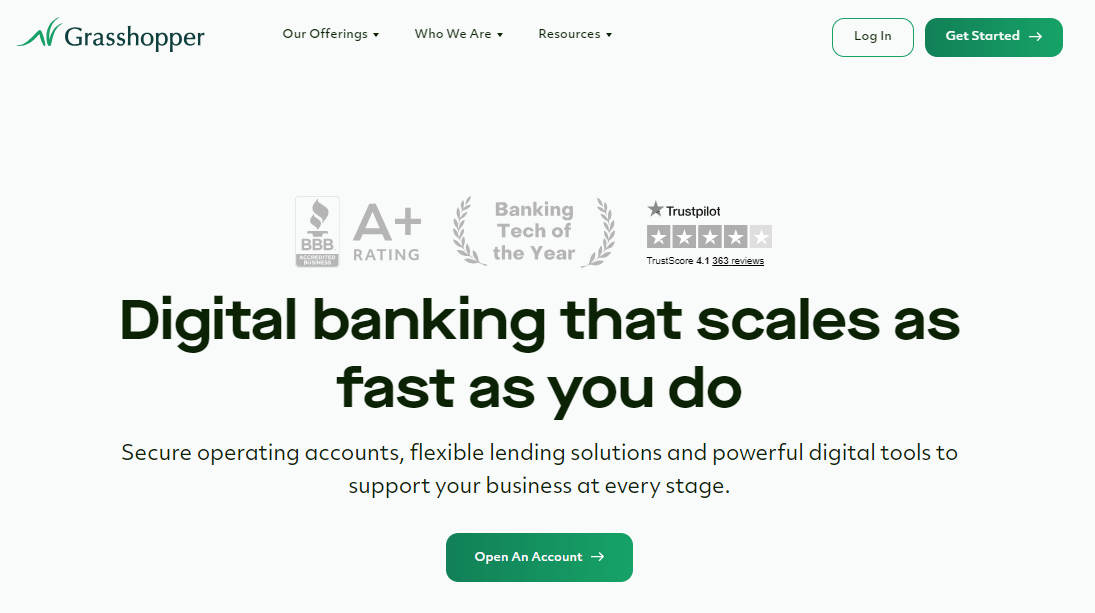
LLCs that want a true bank brand with $0 monthly fee, plus perks like APY and debit card rewards, and you do not need to deposit cash.
Key free features (high level)
Here’s what typically drives the value:
- $0 monthly fee and no minimum balance requirement after opening
- APY and debit card cash back are part of the positioning (rates and requirements can be tiered)
- Many standard payment rails show as complimentary in the fee schedule (including several online banking services)
Limits/fees to watch
This account is “free monthly,” not “free for every action”:
- $100 minimum opening deposit
- Cash deposits are not offered (digital-first)
- Wire fees exist, and the exact amounts depend on the wire type (domestic vs international)
The Dealbreaker (Who should avoid):
Avoid Grasshopper if you need a true $0-upfront start or you handle cash. The opening deposit requirement plus the no-cash-deposit reality makes it a poor fit for cash-based LLCs.
Form Your LLC the Right Way with ZenBusiness
Before choosing a business bank account, make sure your LLC is properly formed. ZenBusiness helps you set up your LLC, get the required documents, and stay compliant. So opening a business bank account is smoother and faster.
Quick Comparison Checklist for the Best Free Business Bank Account for LLC
When you’re comparing “free” LLC business accounts, ignore the marketing and scan the rules that actually cost money: monthly fee conditions, transfer fees, and cash access. Verify the details in the bank’s fee schedule.
Monthly fee + Minimum Balance Rules
Start here because it determines whether “free” stays free every month. Check these items first:
- Is the monthly fee truly $0, or “waived if…”?
- Does the bank charge a monthly fee that matches a state-level cost you already pay? If you open an LLC in Texas, the state’s franchise margin tax kicks in once gross receipts cross the no-tax-due threshold, so a “free monthly” account paired with that tax exposure changes the real cash burn.
- What are the waiver triggers (minimum balance, deposits, card spend)?
- Is there a minimum opening deposit, even if monthly is $0?
- Are there account activity rules that can quietly trigger fees?
ACH/Wire Fees and Transfer Limits
Next, match the account to how your LLC moves money. Before you commit, confirm:
- ACH: standard vs same-day pricing (if offered)
- Wire fees: domestic and international
- Daily and monthly transfer limits (ACH, wires, external transfers)
- Cutoff times (especially if you need fast payouts)
Writing down your “typical week” (how many payouts, how big, how often) makes limits and fees obvious fast.
Cash Deposits + ATM Access
If you ever deal with cash, “near me” usually means deposit convenience, not just a nearby logo. Check these points:
- Can you deposit cash at all? If yes, where (ATM network, retail partners, branches)?
- What are the per-deposit fees (if any)?
- What are the deposit limits per transaction and per day?
- ATM access: in-network availability and out-of-network fees
Accounting Exports/Integrations
A free account is not really free if it creates bookkeeping chaos. Look for:
- Clean CSV exports (with useful memos and categories)
- QuickBooks/Xero compatibility (native or via integrations)
- Multi-user access and permissions (bookkeeper-friendly)
- Notes or receipt support (anything that reduces “what was this?” later)
Before you open any “free” business bank account, run these checks once. They prevent the most common surprise fees and save you time during bookkeeping.
- Monthly fee rule: Confirm it is $0 or understand exactly how to avoid the fee every statement cycle.
- Opening deposit: Check the minimum deposit to open. Do not assume “free” means $0 upfront.
- Transfers that match your workflow: Verify ACH and wire fees plus daily or monthly limits.
- Cash reality: If you handle cash, confirm where deposits happen, the per-deposit fee, and the deposit limits.
- Bookkeeping speed: Make sure exports or integrations fit your accounting process (clean CSV, QuickBooks, Xero).
FAQ – Free Business Bank Account for LLC
These are the questions people ask right before they open a “free” LLC business account. The short answers are simple, but the details matter because fees, deposits, and eligibility rules vary by provider and can change over time.
Is it free to open a business bank account for an LLC?
Yes, sometimes. Many online accounts have no account opening fee, but some banks still require an opening deposit. For example, Mercury says there are no account opening fees and no minimums.
Even if an account is $0 per month, you may still need initial funding, like Grasshopper Bank requiring a $100 minimum deposit to open.
What is the best free business bank account for LLC in 2025?
It depends on how your LLC uses money. For most online-only LLCs, Mercury is a strong “best overall” pick because it’s $0 monthly with no minimums.
If you want earning potential, Bluevine highlights APY options with no monthly fees.
For integrations, Novo emphasizes online-first banking.
For budgeting controls, Relay offers a $0 plan with multiple accounts.
Can I open a free business bank account for LLC online in the United States?
Yes, many providers are designed to be opened fully online (for example, Novo positions itself as “100% online”).
That said, some traditional banks still route certain business types to branch opening or require specific certified documents depending on the entity and state.
Go online-first if you rarely handle cash and your ownership structure is straightforward. Use branch-based banks if you expect frequent in-person services.
Can I get a free business bank account for LLC with no deposit?
Sometimes, Mercury states there are no account minimums and no account opening fees, which supports the “no deposit” experience for many applicants.
But a $0 monthly fee does not guarantee $0 to start. Grasshopper explicitly requires a $100 minimum deposit to open its Innovator Business Checking account.
If “no deposit” is a hard requirement, check the bank’s page for “minimum opening deposit,” not just “$0 monthly fee.”
What fees should I expect even with a “free” business account?
Expect fees tied to actions, not account ownership. Common ones include wire fees, cash deposit fees, and FX-related charges. For example, Mercury notes some advanced features can incur fees (such as non-USD card activity or certain international options).
Overdraft fees can also be a surprise at many banks; the Consumer Financial Protection Bureau notes consumers often cite a “typical” overdraft fee around $35.
What documents do I need to open an LLC business bank account?
Most banks want proof of the business, proof of tax identity, and proof of who controls it. The SBA lists common requirements like an EIN, formation documents, and ownership agreements.
Wells Fargo’s checklist for LLCs includes Articles of Organization (or similar state equivalents).
Banks also identify beneficial owners under FinCEN rules.
How do I find a free business bank account for LLC near me?
Start with what “near me” means for your business. If you need cash deposits, you either want a local branch bank, or an online account that supports cash deposits through networks.
If you do not handle cash, “near me” matters less, and you can prioritize online accounts with $0 monthly fees.
Points to check:
(1) cash deposit options,
(2) ATM network access, and
(3) whether “free” is conditional on balances.
- Internal Revenue Service (IRS): Get an Employer Identification Number (EIN)
- U.S. Small Business Administration (SBA): Open a business bank account
- Federal Financial Institutions Examination Council (FFIEC): Beneficial Ownership Requirements for Legal Entity Customers
- Consumer Financial Protection Bureau (CFPB): Consumer experiences with overdraft programs (Report)
- Mercury: Pricing (fees & plans)
- Bluevine: Business Checking FAQs (fees, minimums, overdraft)
- Novo: Fee Schedule (PDF)
- Relay Financial: Plans & Pricing (Starter $0/month)
- Grasshopper Bank: Innovator Business Checking Fee Schedule
Get Your LLC Ready for Business Banking with Bizee
Most free business bank accounts require an active LLC. Bizee simplifies the setup process so you can form your LLC, stay compliant, and move on to choosing the right bank with confidence.